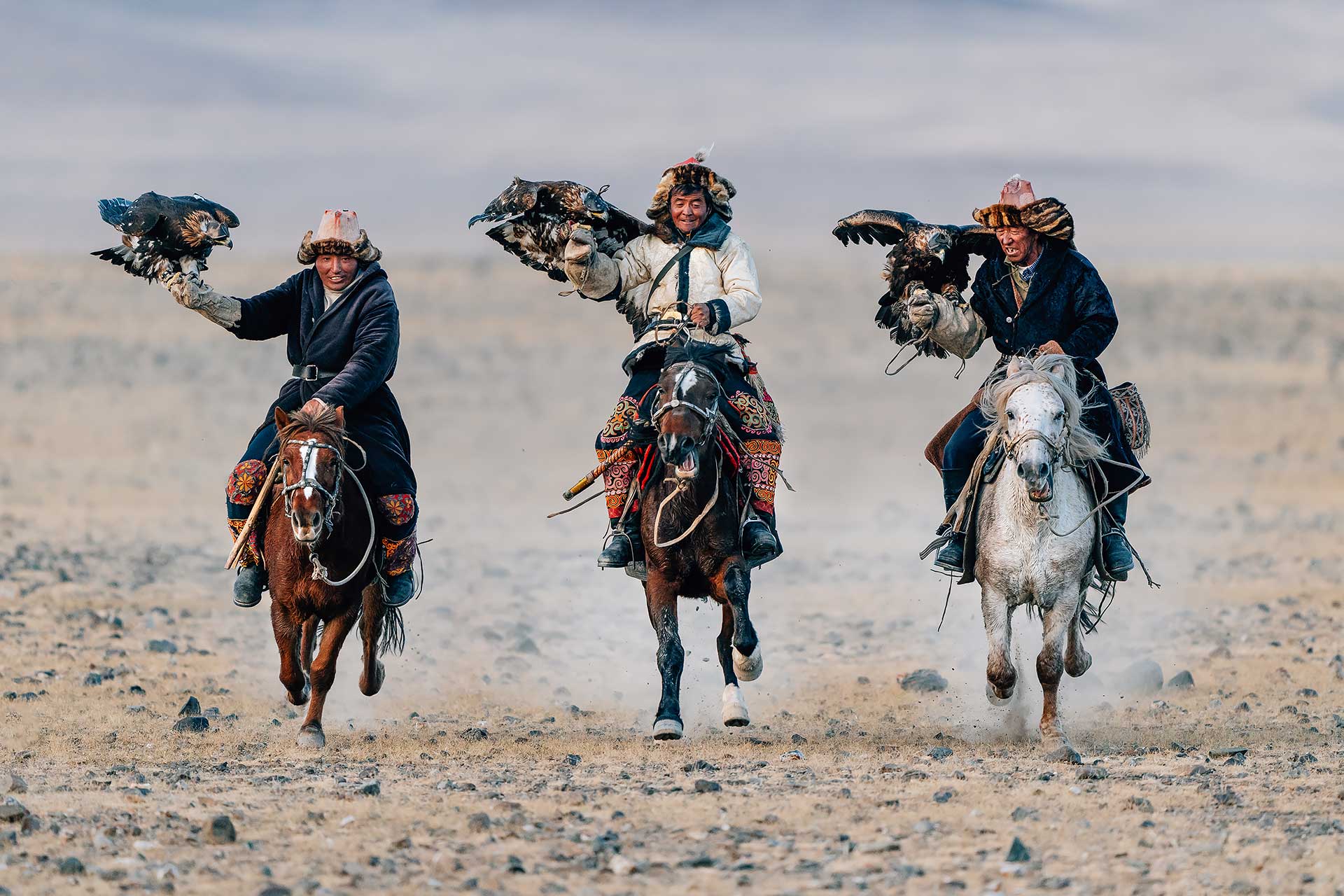
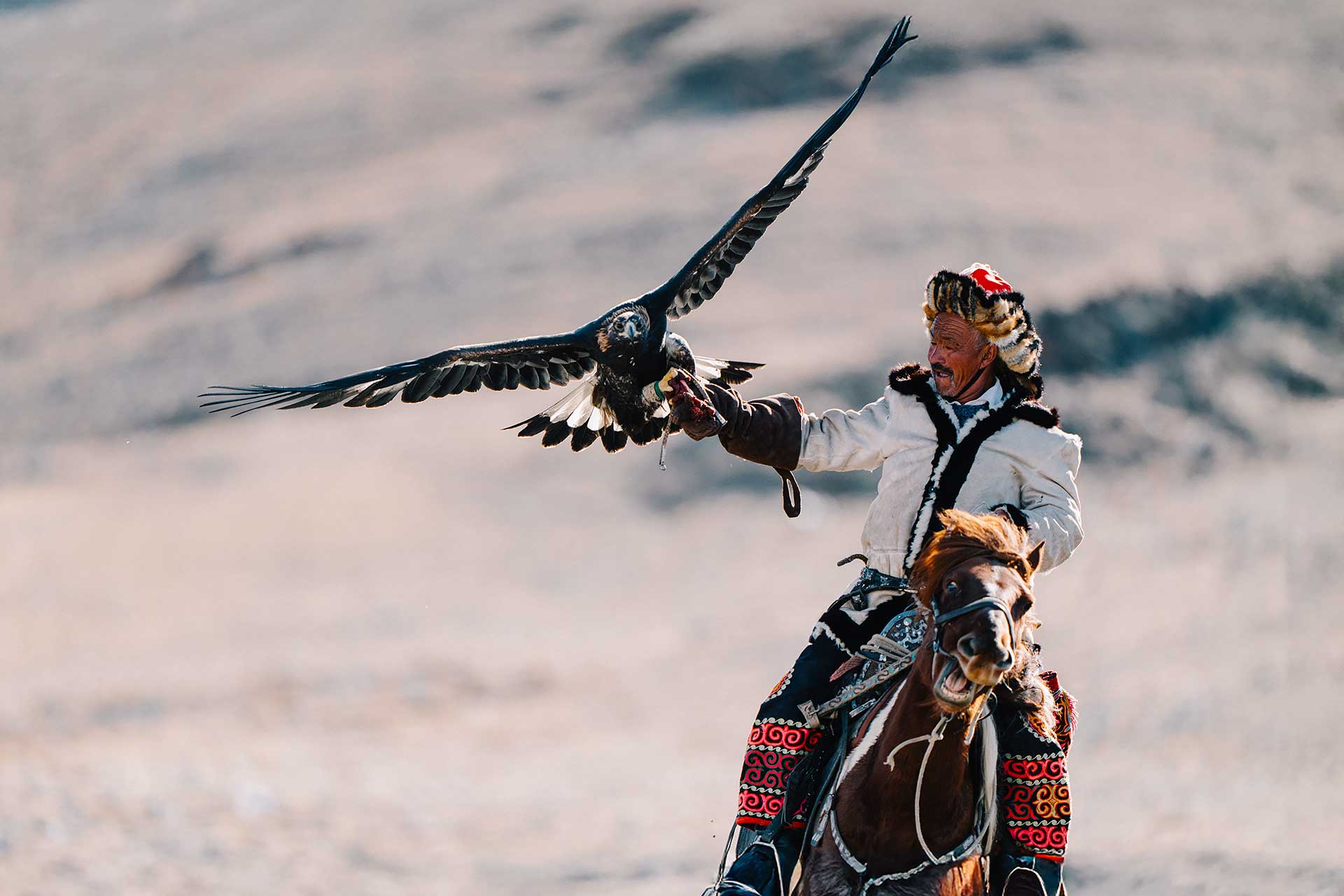
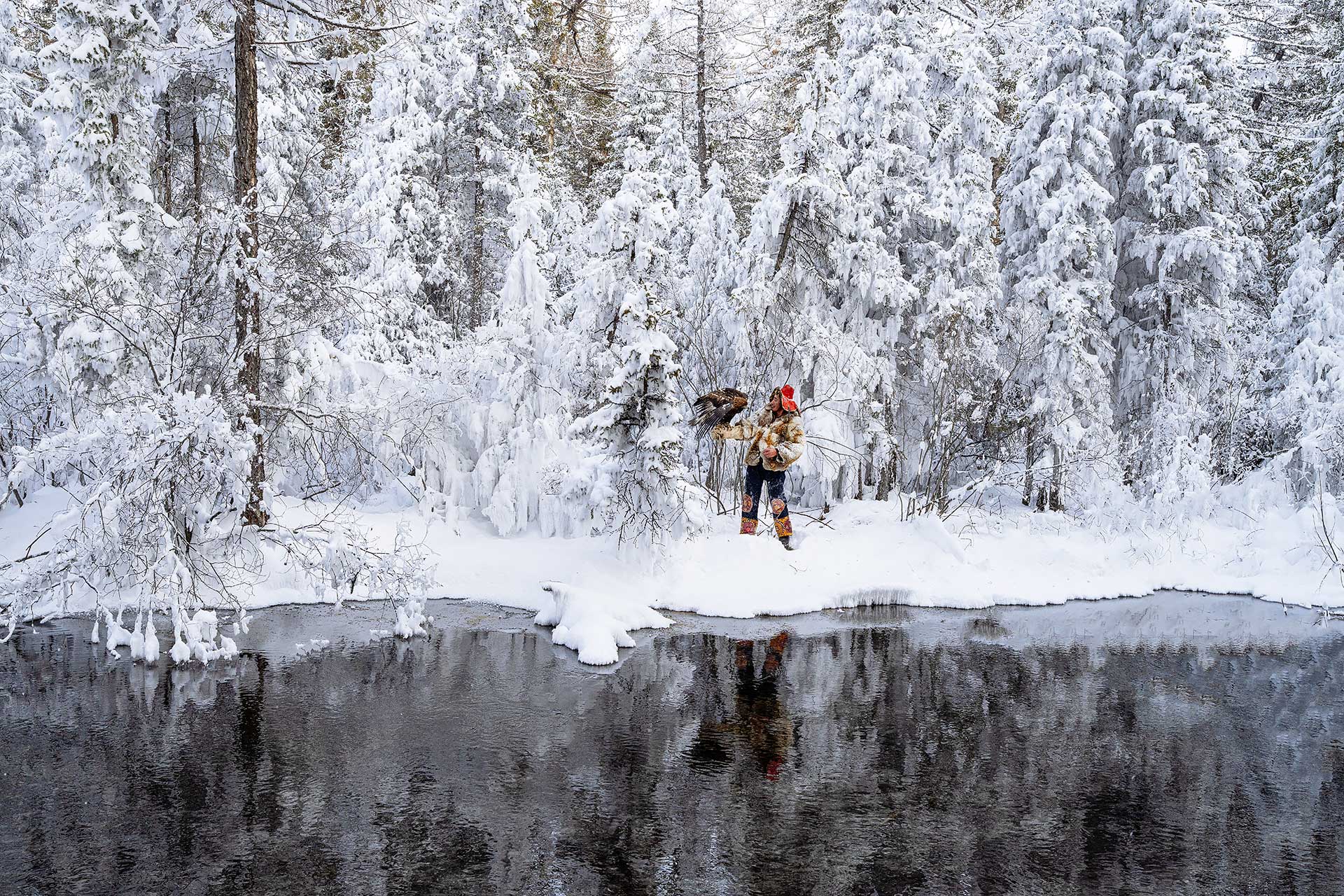
Imagine standing on a rocky hill in the Bayan-Ölgii region of Western Mongolia. The temperature is below -20 degrees Celsius, the dawn wind is piercing to the bone, and your fingers are almost numb under the thin gloves you have to remove to turn the camera dial. Before you stands a Kazakh Burkitshi eagle hunter in a thick wolf-fur robe, riding a majestic horse, with a giant golden eagle perched serenely on his arm.
For a photographer, photographing eagle hunters in Mongolia is more than just a photo shoot it is a mental, physical, and cultural expedition. Here is a glimpse into that magical and challenging experience.
Battling the extreme cold, the first major challenges are logistics and equipment durability. In the Mongolian winter (when the Eagle Festival is usually held), the air is so cold that it can freeze the lubricant inside the lens.
A camera battery that normally lasts all day can die in 15–20 minutes. Photographers must keep spare batteries in their innermost jacket pockets, relying on body heat to keep them alive. Touching the magnesium alloy camera body without gloves can cause skin contact and burns. Photographing a golden eagle in action requires a keen sense of humor. When a hunter releases his eagle from a hilltop to catch bait in a valley, it flies at speeds of up to 240 km/h. You can’t ask it to retake its flight.
When the first flap of its wings begins, you must be ready with a shutter speed of at least 1/2000 second and continuous AF locked on the eagle’s eye. The best traditional tent experiences often take place outside in the field.
After a long day of shooting in a snowstorm, hunters often invite photographers into the warmth of their Ger (yurt). This is where the photographer switches from a telephoto lens to a wide-aperture prime lens (such as a 35mm or 50mm f/1.4) to capture the intimate atmosphere of the family.
The natural light pouring in through the Ger’s opening creates incredible silhouettes and drama the steam of the mare’s milk tea (airag), the wrinkles on the elderly hunter’s face, and the warmth of their family. One thing that always amazes photographers is the bond between hunter and eagle.
Golden eagles are not pets; They are wild predators adopted as cubs, cared for for about 10 years, and will eventually be released back into the wild to breed. Through the lens of the camera, the photographer can capture tender moments of contrast how the giant bird with claws capable of crushing wolf bones rests its head affectionately on the hunter’s cheek.
A Photographer’s Conclusion when the memory card is full and the adventure is over, what the photographer brings home is not just epic high-resolution photos. The photographer returns with a deep respect for a thousand-year-old tradition that still survives in one of the most remote places on earth. The best photos from this expedition are not just sharp images, but images that successfully capture the soul, pride, and silence of Mongolia