Before capturing color, photographers must contend with logistical preparations. Color powder (gulal) and brightly colored water are the camera sensor’s mortal enemies. The camera is completely wrapped in a protective plastic rain cover or cling wrap, leaving only the lens tip with a UV filter attached. Duct tape is applied to every opening in the camera body.
The photographer’s “disposable” outfit typically consists of a cheap white cotton shirt ready to be discarded after the festival, complete with sunglasses to protect the eyes from the colored powder.
Photographers typically avoid mainstream tourist spots and head straight to the heart of tradition in the Braj region (Uttar Pradesh)
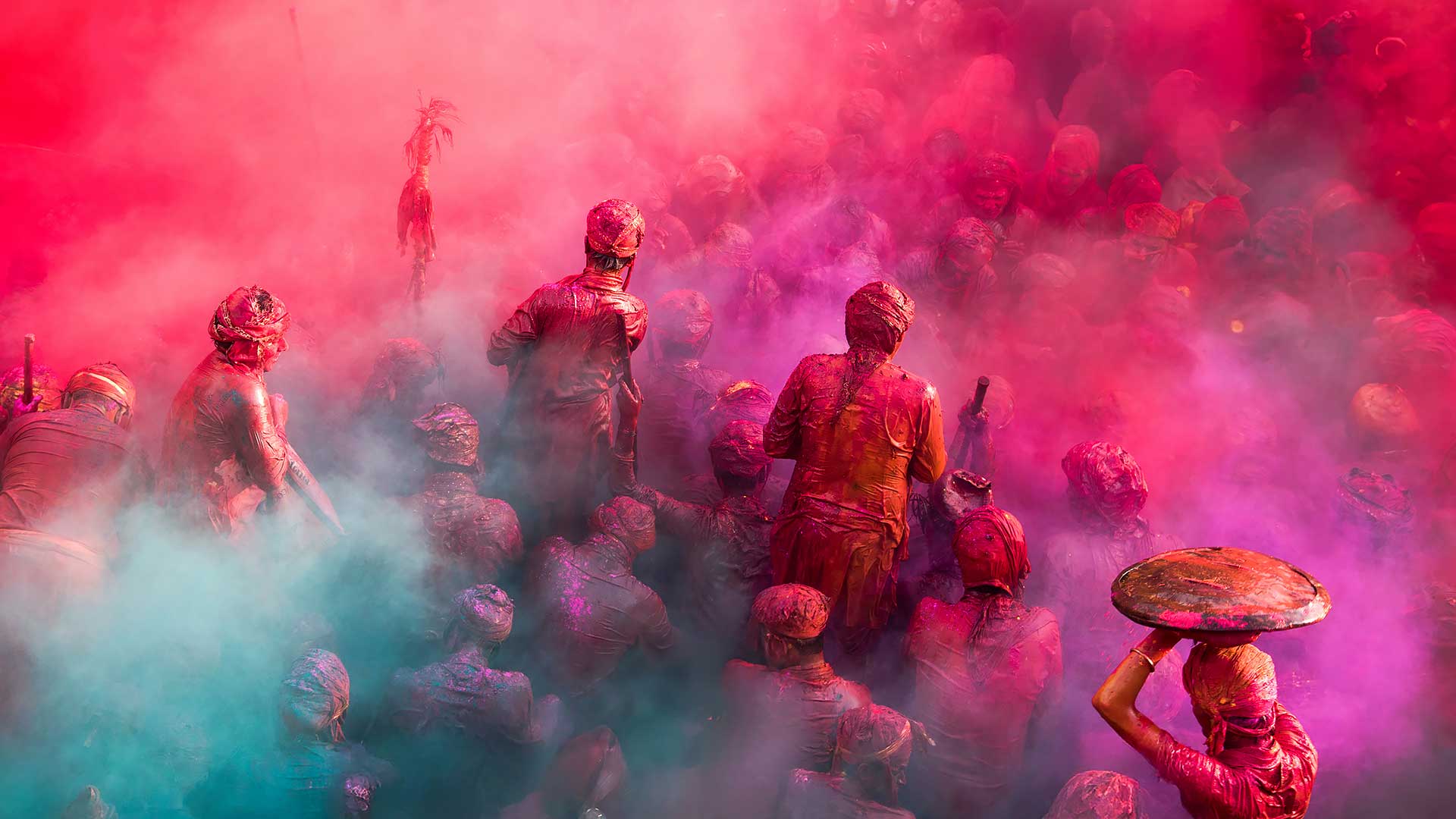
Barsana & Nandgaon (Lathmar Holi) here, the traditions are unique and extreme. Women beat men with large bamboo sticks (lath). Photographers must be willing to squeeze into the narrow temple corridors, braving the splashes of water, while firing their cameras in burst mode to capture the dramatic moment when the sticks strike the men’s shields.
Vrindavan (Banke Bihari Temple) is the pinnacle of magical chaos. Inside the temple, thousands of people throw flowers and flowers in the darkness, illuminated by beams of sunlight from the roof vents. This is where masterpieces of spirituality and euphoria are often created.
Upon entering the crowd, the photographer’s senses are immediately bombarded. The sound of drums (dholak), chanting, and billows of colorful smoke create a surreal atmosphere.
Seeking contrast, photographers don’t just capture the flying colors. They look for the sparkling eyes of a child behind a face covered in pink, or the solemn expression of an elder covered in green powder.
Compositions amidst the chaos use a wide-angle lens to capture the colossal scale of the crowd, or a fast prime lens to isolate a single subject amidst the storm of color.
The journey is draining, with photographers having to be prepared for the camera to suddenly jam due to powder getting in.
Lenses must be cleaned every few minutes with a special microfiber cloth (without blowing on them, as breath can permanently adhere the powder).
Children pelt them with water balloons from rooftops as they walk through the narrow alleys.
After a day of intense color, photographers return to their accommodations, their bodies transformed into “abstract canvases” (skin and hair typically turn pink or purple for a few days).
However, when the memory card is inserted into the laptop, the fatigue is rewarded. On the screen appear magical images of puffs of gulal smoke frozen in the air, the carefree laughter of local dancers, and portraits of people united by color, regardless of caste or background. Holi, for photographers, is a celebration of life itself.
Are you planning a trip to photograph Holi in person, or want to learn more technical tips for photographing during this extreme festival?