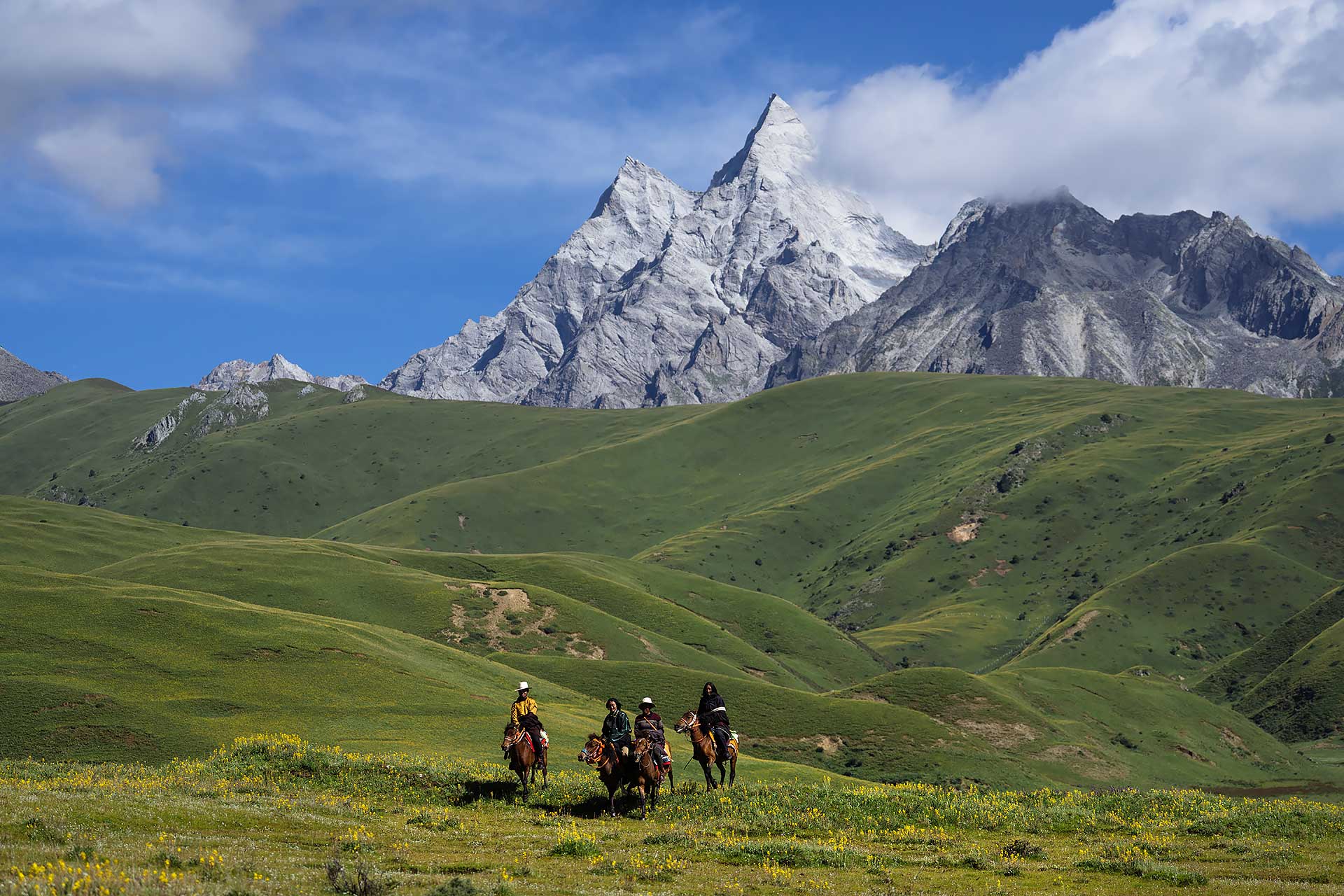
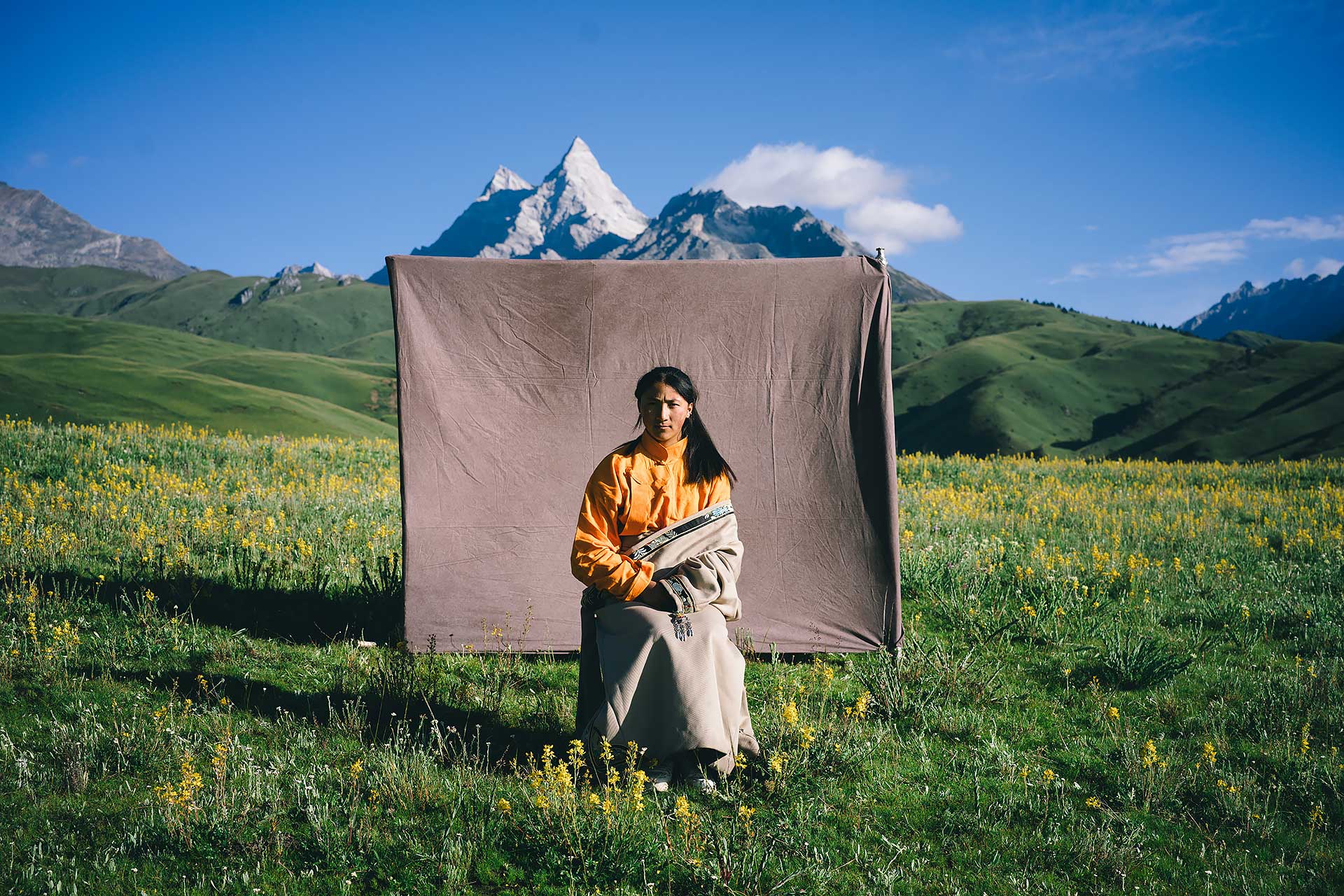
For a photographer, a journey to Tibet is more than just a trip to a distant land; it is a quest for light, silence, people, and stories in a realm suspended between the sky and the mountains.
The journey begins in Lhasa, a city set high upon the plateau. Upon arrival, while the camera may be ready in the bag, the photographer must first learn to pause. The altitude demands time for the body to acclimatize. The first day is not about chasing shots, but about becoming familiar with Tibet’s thin air, its brilliant light, and a rhythm of life that feels unhurried.
The next morning, the camera goes to work.
Standing before the Potala Palace, the photographer waits for the sun. As the morning light gently touches the white walls and golden roofs, the structure transforms from mere architecture into a powerful symbol. It is moments like these that make a photographer willing to rise before dawn—for the finest light often lingers for only a few fleeting minutes.
From the Potala, the journey continues to the Jokhang Temple and Barkhor Street. Here, the focus shifts to the human element.
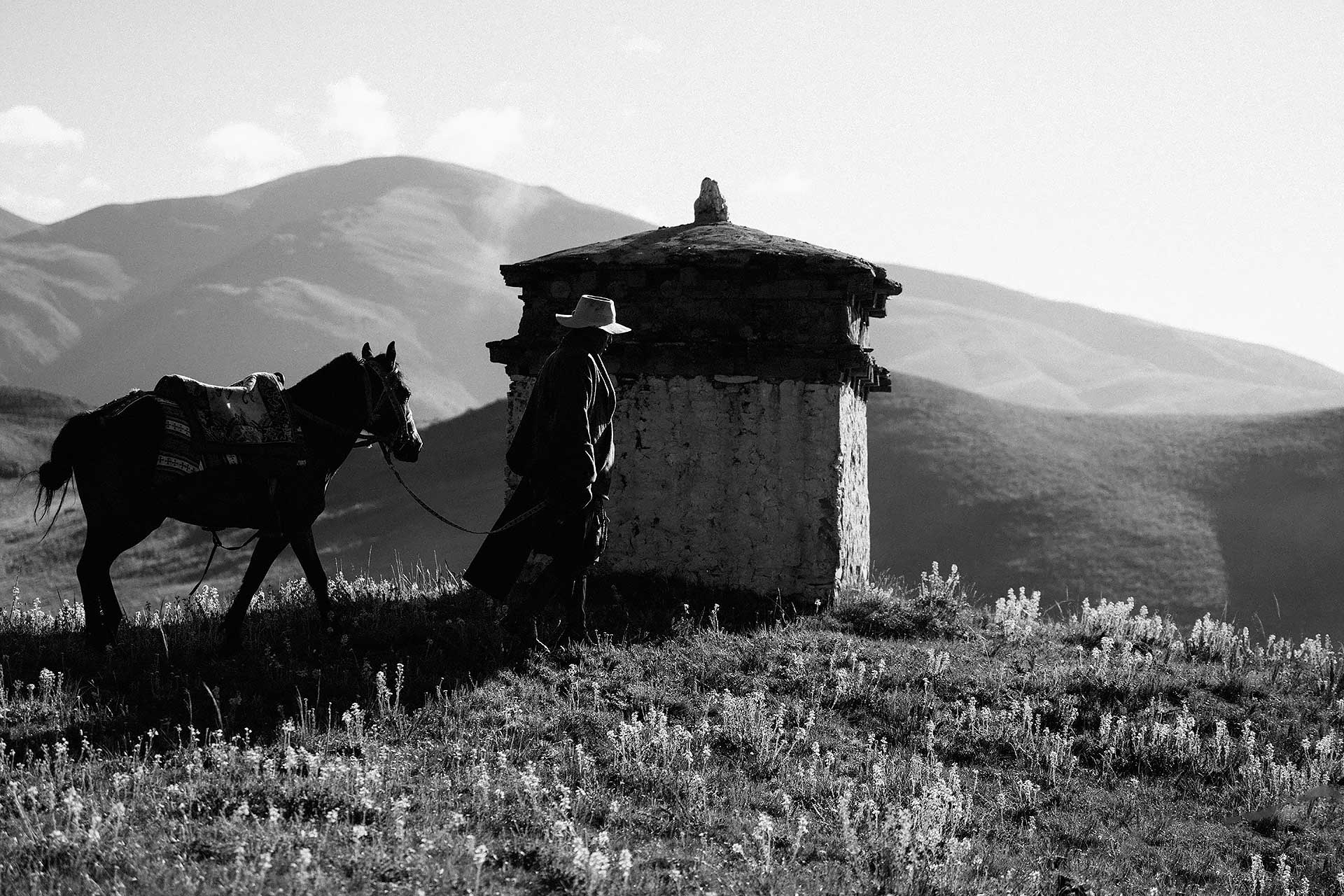
It is not just the buildings that captivate; it is the sight of a pilgrim’s hands clutching prayer beads, a spinning prayer wheel, the weathered face of an elder, slow, deliberate footsteps, prayer flags fluttering in the wind, or shafts of light filtering through the crevices of ancient structures.
The photographer begins to realize that the best images do not always require spectacular scenery. Sometimes, a simple expression can tell a deeper story of Tibet than a sweeping mountain panorama.
At Sera Monastery, the atmosphere shifts again. Monks engage in debates accompanied by expressive hand gestures. To the photographer, this place is a natural stage—a setting alive with movement, expression, shadow, and emotion that unfolds in rapid succession.
Then, the journey leads away from Lhasa.
A long road takes the photographer to Yamdrok Lake. From the heights, the turquoise-blue lake resembles a painting unfurled amidst the mountains. Here, the photographer learns about space—how to let the sky, the mountains, and the silence fill the greater part of the frame. Occasionally, a local house or a lone figure walking in the distance comes into view against the landscape. These tiny human figures serve to emphasize the immense scale of the Tibetan plateau.
The journey continues past the Karola Glacier and Shigatse, along long stretches of road leading toward the Everest region. Every bend reveals a new composition: winding roads, grasslands, snow-capped mountains, rivers, small villages, and fluttering prayer flags.
A photographer might find themselves asking the vehicle to stop more and more frequently.
Not because the destination is still far off, but because Tibet itself is the journey.
Towards Everest
As one draws closer to Everest, the landscape becomes increasingly dramatic.
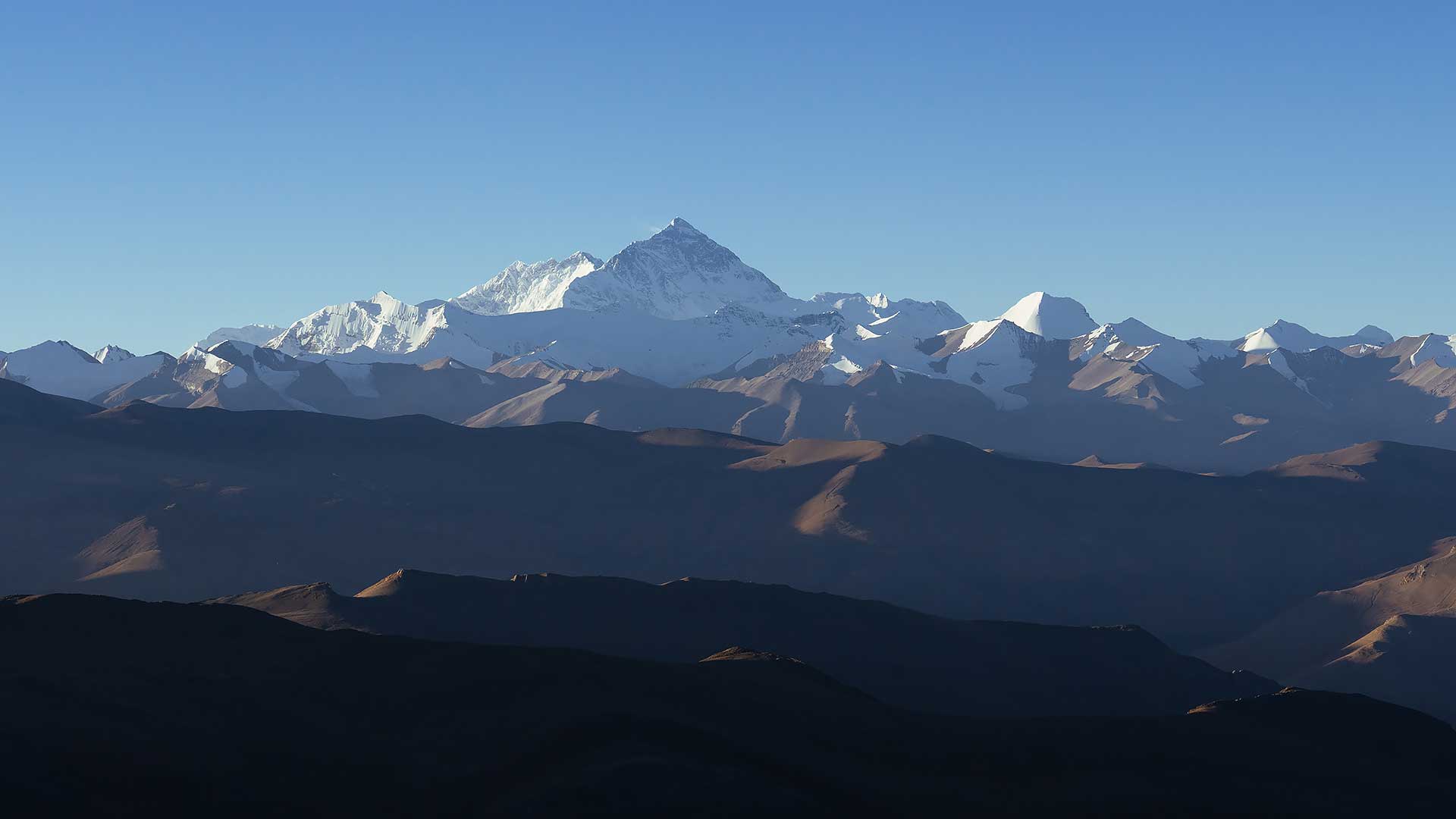
At Gyawu La Pass, a panoramic view of the Himalayas opens up. In clear weather, several towering peaks are visible at once, including Everest. Photographers busy themselves changing lenses, scouting for foreground elements, waiting for the clouds to shift, and observing the direction of the light.
Everest.
For a photographer, viewing Everest through the viewfinder is an experience that defies description. The mountain appears both distant and colossal. A camera can likely capture only a fraction of that experience.
As sunset approaches, the snow on the summit changes color.
White turns to gold.
Then, slowly, it shifts to pink.
Finally, the light fades away.
The photographer falls silent, simply pressing the shutter a few times, knowing that this moment will never return in quite the same way.